

Invoice financing can be expensive compared to other business loans, but it can be cost-effective if your customers pay on or before their due date. For traditional loans, you pay interest throughout the life of the loan. But for invoice financing, you’ll only need to pay the fees when the invoices are unpaid. Invoice financing, also referred to as accounts receivables financing or receivables financing, lets companies arrange for funds when customers are yet to pay or fail to pay on time. While customers have the option to delay the payment, firms that sell goods and services to them cannot postpone the business operations as it would delay the supply of products, hampering their market image. Obtaining funds from these financing options helps them tackle delays in payments from the customer end.
Real-time credit: Your key to unlocking B2B e-commerce growth
Set up your invoicing parameters directly in your CRM, including payment terms and delivery schedules for assets = liabilities + equity each customer. Once these details are configured, your invoicing process will run automatically based on the latest customer data, with no need to maintain separate billing records or manually update multiple systems. For sales teams, this means invoices are processed more quickly, payments arrive sooner, and mistakes and delays are minimized, allowing teams to focus on sales and businesses to focus on scale.
Company
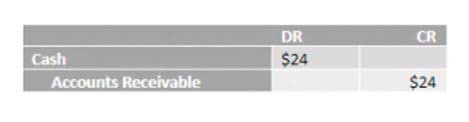
In contrast, A gets to fund its working capital needs quickly without having to wait for its customers to pay them. Invoice financing usually offers greater flexibility because you can pick and choose which invoices will be financed. Once you are approved for invoice financing, the time between submitting an invoice and receiving funds is typically less than 48 hours. There are no hard and fast disadvantages of invoice financing, but there may be reasons why it is not your first choice for business financing. Businesses with good credit and that meet other business lending qualifications may want to consider other lower-cost financing options, such as a business line of credit. You may have to provide an accounts receivable aging report (A/R report) and or business bank account statements as part of the application process.
- Even if cash flow or working capital isn’t a major issue, new business owners can still benefit from invoice financing when scaling their business.
- Initially submit invoices and documentation to your selected provider.
- Once B collects the entire $5000 from A’s customers, it pays back the remaining 15% after its fee deduction.
- But instead of selling invoices, the business gets a loan backed by its expected cash flow.
- For sales teams, this means invoices are processed more quickly, payments arrive sooner, and mistakes and delays are minimized, allowing teams to focus on sales and businesses to focus on scale.
- The lenders can either set the invoice financing as a term financing where you’ll receive a lump sum of cash or a line of credit where you’ll be given access to a credit line with a set limit.
Invoice finance definition
Check your eligibility with our online form without affecting your credit score. With Xero’s powerful tools, small businesses can stay organized and confident. You should consult your own professional advisors for advice directly relating to your business or before taking action in relation to any of the content provided. Ever thought your cash flow would be better if everyone just paid what they owed you? Our business is built on supporting relationships between people and organizations, relationships that extend across frontiers of all kinds – geographical, financial, industrial, and more.
- The overall APR, typically 15-35%, is high compared to that of banks or online term lenders.
- This is in comparison to accounts payable, which is the money you owe your suppliers but have not yet paid.
- Invoice factoring is an agreement with a third-party company (the “factor”) to purchase your accounts receivables at a reduced amount of the face value of the invoices (typically 70% to 90% of the total).
- Once approved, it advances 80 percent to 90 percent of the unpaid invoices, which you can use for any business expenses.
- You can use your advance to further increase your company’s online visibility.
Register with us to quickly receive a quote that is tailored for your business. This is applied as a fee for a set time – for example, 3% for the first 30 days of an advance against the invoice. Many factors will charge additional fees if the invoice is outstanding longer – for example, 0.5% for each 10 days after the first 30 days. Invoice financing often makes sense when a business needs to get funding more quickly and can’t qualify for less expensive financing.
AR finance is a helpful way to help bridge the gap between providing a service to a client and receiving payment, which for many businesses, can occur months later. Here are some of the reasons some people might use receivable finance. Want to find out the difference between invoice financing and receivable financing? We explore definitions, differences, types and invoice financing uses in today’s article.
The Bankrate promise
B2C (business to consumer) companies looking for financial help may be out of luck, especially if their cash flow originates at a point-of-sale machine rather than long-term invoices. Bankrate.com is an independent, advertising-supported publisher and comparison service. We are compensated in exchange for placement of sponsored products and services, or by you clicking on certain links posted on our site. Therefore, this compensation may impact how, where and in what order products appear within listing categories, except where prohibited by law for our mortgage, home equity and other home lending products. Other factors, such as our own proprietary website rules and whether a product is offered in your area or at your self-selected credit score range, can also impact how and where products appear on this site.
Who Is Eligible for Invoice Finance?

Calculating the Accounting for Churches best type of invoice financing, the lowest rates, and the ideal lender for your business can be very time-consuming. Whether you choose invoice financing or invoice factoring, there are several advantages over many other forms of business borrowing, such as. The terms and costs of invoice financing can vary and it may be difficult to find and compare all your options.
- We offer extensive economic and business risk resources thanks to our teams of experts around the world.
- Most types of businesses that regularly invoice other businesses, but need to get paid more quickly, can be a candidate.
- The money you get from invoice financing can help with cash flow issues since you can use the money for almost any business purpose.
- If you pay a higher fee then you can sign up for nonrecourse factoring.
- This is because they’re more complex and need more flexibility than most consumer transactions, which are usually based on immediate, cash-in-advance payment terms.
- It provides rapid liquidity by using accounts receivable as collateral with no capital-intensive traditional loans.
- Invoice financing lenders consider several factors in making their decision to accept your company as a borrower.
In addition, a conventional business loan enables you to maintain privacy regarding your borrowing activity, whereas invoice factoring will reveal to your clients that you are using third-party invoice financing. Instead of sitting on unpaid invoices, you can receive a large percentage of each invoice as soon as it is issued. Invoice finance is a type of borrowing that uses the security of your company’s unpaid invoices as security for a loan or advance.